
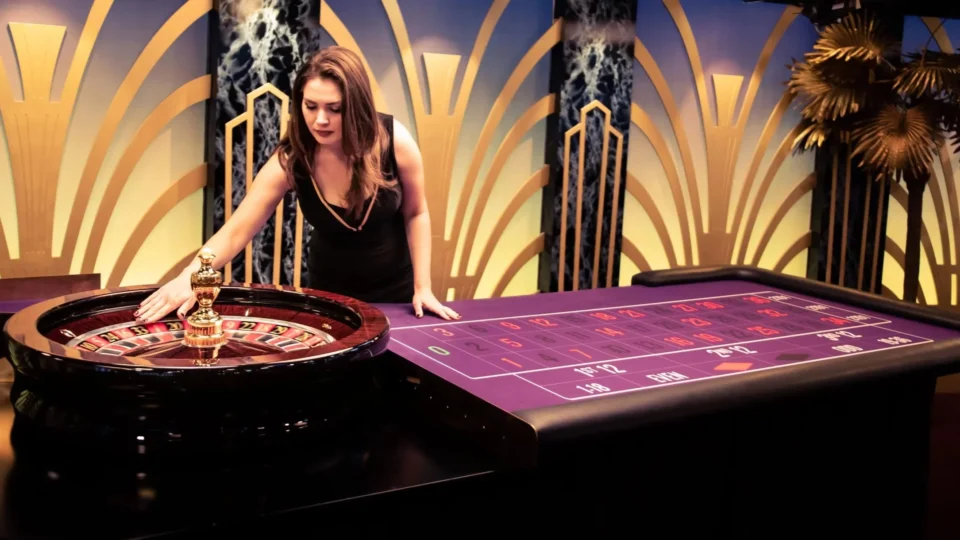
House edge is one of the most direct ways to assess the cost of playing any table game over a sustained session. Two of the most common live dealer games in any lobby are roulette and blackjack, and they carry very different edge structures depending on the variant and the decisions made during play. The edge calculation of each game is useful to players choosing bitcoin roulette online platforms, and it impacts the figures in practice.
Roulette edge calculation
The wheel configuration fixes roulette’s house edge and does not change based on how the player bets. On a single-zero European wheel, 37 pockets include one zero. Straight-up bets payout 35 to 1, but the true odds are 36 to 1. The difference between the true odds and the payout odds produces the house edge of 2.7 per cent, which applies equally to inside bets, outside bets, and combination positions. A player covering one number or covering 18 numbers faces the same 2.7 per cent edge on each chip placed.
The edge on standard bets on double-zero American roulette goes up to 5.26 per cent. There is no uniform rule that applies to other positions on an American wheel, so a five-number bet with zero, double zero, one, two, and three carries a higher edge of 7.89%. Live roulette tables using the la partage or en prison rule on even-money bets reduce the effective edge on those positions to approximately 1.35 per cent when zero is hit, which is the lowest edge available in standard live roulette formats.
Differences in blackjack edge
Blackjack’s house edge is not fixed in the same way. It depends on two variables: the rule set applied by the table and the decisions the player makes during the hand. A blackjack table with favourable rules and a player following basic strategy consistently can carry a house edge below 0.5 per cent. The same table with suboptimal player decisions can operate at an effective edge several times higher, because each incorrect hit, stand, double, or split choice relative to basic strategy adds to the expected loss per hand.
The rule set applied at a specific table affects the edge independently of player decisions:
- Number of decks in the shoe. More decks increase the edge slightly, with single-deck blackjack carrying a lower base edge than a six or eight-deck shoe.
- Blackjack payout ratio. A table paying 3 to 2 on a natural blackjack carries a lower edge than one paying 6 to 5, which adds approximately 1.4 percentage points to the house edge.
- Dealer hits or stands on soft 17. A dealer required to hit soft 17 increases the edge by approximately 0.2 per cent compared to a table where the dealer stands.
- Double after split permission. Allowing doubling after a split reduces the edge in the player’s favour, while restricting it increases it.
A single-zero live roulette table without la partage carries a fixed 2.7 per cent edge regardless of what the player does. A live blackjack table with standard rules and a player applying basic strategy accurately carries an edge typically between 0.4 and 0.6 per cent. On those figures, blackjack offers a lower edge than roulette by a substantial margin when the player’s decisions are consistent with basic strategy.