
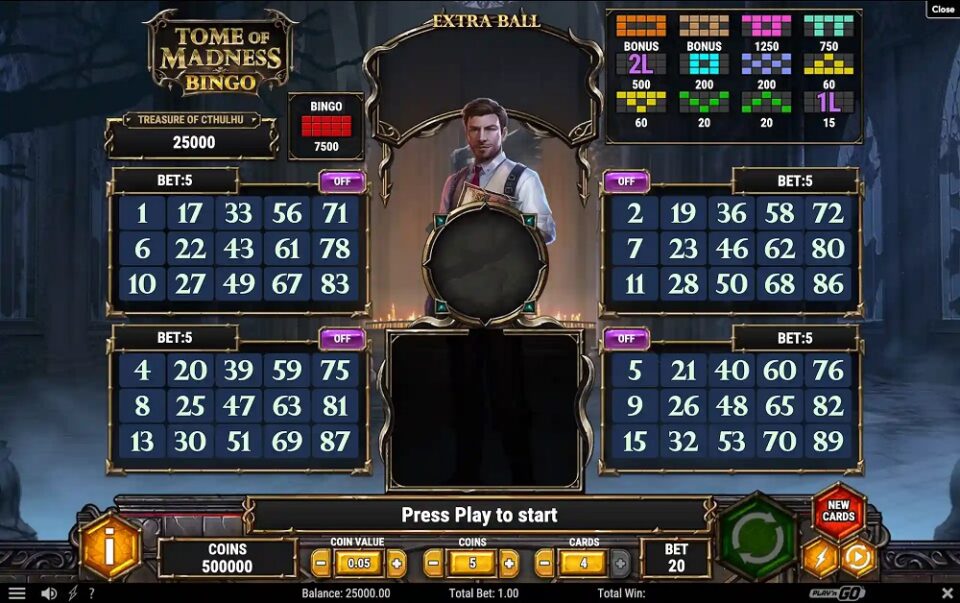
In traditional brick-and-mortar bingo halls, game fairness relies on mechanical devices. Air-blower machines toss numbered balls in a transparent chamber until one randomly enters an extraction tube, visible to everyone in the room. This physical process assures players that no individual can predict or manipulate which number appears next.
When bingo transitioned into the digital space, software developers had to replicate this physical randomness using pure computation. The core technology that makes fair, unpredictable digital gameplay possible is the Random Number Generator. Understanding how these systems function, how they are tested, and how they secure game integrity gives players clear insight into the mathematics behind every digital call.
The Core Concept of Random Number Generation
At its simplest, a Random Number Generator is a computational program or hardware component designed to output a sequence of numbers that lack any discernible pattern, predictability, or bias.
In digital gaming, these systems operate continuously in the background:
-
Constant computation: The algorithm does not wait for a player to purchase a ticket or for a round to start. It produces millions of random numerical values every second, even when the software is idle.
-
Instantaneous selection: When the bingo software triggers a draw event, it grabs the exact mathematical output generated at that precise millisecond, converting that raw computation into a visible bingo ball on screen.
-
Non-predictable sequences: Every number selected is mathematically independent of previous draws, ensuring that past outcomes have zero influence over future calls.
This mathematical engine handles everything from generating the unique card layouts bought by players to deciding which numbers are called during each round.
Pseudo-Random versus True Random Number Generators
In computer science and gaming engineering, systems fall into two primary classifications: Pseudo-Random Number Generators and True Random Number Generators.
True Random Number Generators
These devices extract randomness from unpredictable physical phenomena in the real world:
-
Physical entropy harvesting: They measure microscopic physical fluctuations, such as thermal noise in electrical resistors, atmospheric radio static, or quantum radioactive decay.
-
Unpredictable source data: Because these physical events are chaotic and governed by the laws of thermodynamics and quantum mechanics, their outputs cannot be predicted or reversed through mathematical algorithms.
-
Application scope: While exceptionally secure, these hardware setups are slower and computationally heavy, often used as base inputs for larger networks rather than handling real-time high-speed game calls directly.
Pseudo-Random Number Generators
The vast majority of online gaming platforms utilize software-based algorithmic systems known as Pseudo-Random Number Generators:
-
Algorithmic execution: These systems use mathematical formulas to generate sequences of numbers that pass strict statistical tests for randomness.
-
The seed value: An algorithm begins with an initial starting number called a seed. To make sure the output cannot be calculated, the software derives this seed from high-entropy external inputs, such as exact system clock timestamps down to the nanosecond, mouse movements, or CPU thermal data.
-
Deterministic security: While technically deterministic if someone possessed the exact seed and formula, modern cryptographic seed derivation makes guessing or reverse-engineering the sequence computationally impossible.
For online bingo, high-performance algorithms supply the rapid numerical outputs required to operate multiple simultaneous game rooms smoothly.
The Journey of a Digital Bingo Ball Draw
Translating complex mathematical outputs into a straightforward game of 75-ball or 90-ball bingo requires a structured software pipeline.
The generation of each called number follows a clear process:
-
Seed generation: The server captures a dynamic seed from an unpredictable system parameter at the start of the gaming cycle.
-
Numerical output: The algorithm processes the seed through complex mathematical functions, generating a massive integer.
-
Range mapping: The system scales down this massive integer to fit the specific constraints of the game, mapping the value to a number within 1 through 75 (for North American bingo) or 1 through 90 (for Commonwealth bingo).
-
Duplicate elimination: Bingo rules dictate that a number cannot be called twice in the same round. The software checks the output against an internal list of already-drawn numbers. If the value has already appeared, it instantly draws the next output in fractions of a microsecond.
-
Graphic rendering: The final approved number is transmitted across the encrypted network to the player interface, where it displays as an animated ball alongside automated card marking.
This entire pipeline executes in milliseconds, maintaining a steady, enjoyable pace across thousands of connected devices.
How Card Generation Maintains Game Integrity
Random Number Generators do not just call the balls; they are also responsible for generating the digital cards sold to players before the game begins.
Card distribution relies on strict mathematical rules:
-
Standardized column limits: In 75-ball bingo, the generator produces five unique numbers for the B column (1 through 15), five for the I column (16 through 30), four for the N column around the central free space (31 through 45), five for the G column (46 through 60), and five for the O column (61 through 75).
-
Preventing identical cards: The platform verifies that no two players in the same game room receive identical card layouts, preventing duplicate claims on single-line patterns.
-
Unbiased distribution: The algorithm ensures that every number within a column has an equal mathematical probability of appearing on any given ticket, preventing cold spots across digital card batches.
By handling card generation through the same certified engine, the platform guarantees that every player starts each round with a fair, unbiased ticket.
Independent Auditing and Regulatory Certification
Because players cannot see the physical code running on remote servers, online gaming jurisdictions enforce strict regulatory frameworks to guarantee system fairness. Operators cannot simply write an in-house algorithm and self-certify its fairness.
Legitimate online bingo platforms must submit their software to independent testing laboratories:
-
Accredited testing agencies: Specialized third-party organizations like eCOGRA, iTech Labs, BMM Testlabs, and Gaming Laboratories International test the gaming software.
-
Statistical testing batteries: Auditors subject the software to millions of simulated game rounds, running empirical tests like the Diehard tests, chi-square analyses, and NIST statistical suites to detect any mathematical bias, repetition, or predictability.
-
Source code evaluation: Technical engineers inspect the platform underlying code to confirm that no hidden logic, backdoors, or administrative overrides exist that could allow operators to manipulate outcomes.
-
Continuous compliance tracking: Regulators conduct periodic spot-checks and require casinos to display verifiable audit seals and certificate numbers in their website footers.
These independent checks ensure that licensed platforms deliver genuine mathematical fairness on every turn.
Frequently Asked Questions
Can an online bingo site manipulate the number generator to favor specific players?
On licensed and regulated platforms, operators have no technical ability to alter the engine. The random number software is hosted on secure, encrypted servers, and the underlying code is locked and audited by independent regulatory bodies. Any unauthorized modification to the software would fail automated compliance checks and result in immediate license revocation.
Does buying more cards increase the chance of winning in an online bingo room?
Holding more cards increases your proportional mathematical share of the total tickets in play for that specific round, which improves your chances of hitting the winning pattern first. However, it does not alter the underlying randomness of the calls themselves, as each number remains an independent random draw.
What happens if my internet connection drops during an active online bingo game?
Online bingo games are calculated server-side rather than on your local device. If your internet connection disconnects after purchasing tickets, the server continues processing the round automatically. If your card achieves a winning line or full house, the software automatically marks the numbers and credits your account balance with the winnings.
Is the sequence of called numbers pre-determined before the game round begins?
In modern online bingo architectures, numbers are typically generated in real time at the exact moment of each call rather than generated as a static pre-determined list before the round starts. This live, millisecond-by-millisecond drawing method maximizes security and eliminates the risk of an internal data leak revealing the sequence beforehand.
Can external software or betting bots predict the next bingo number?
No. Modern gaming engines use advanced cryptographic algorithms with seeds derived from chaotic, millisecond-level inputs. Because the internal state of the algorithm changes millions of times per second, no third-party software, bot, or mathematical formula can predict which number will be selected next.
How does server latency affect the fairness of number generation?
Server latency does not compromise the mathematical fairness of the draw. The random number generator runs entirely on the central game server, which determines the official sequence of calls and logs winning claims based on its own master clock, regardless of minor visual display delays on individual user devices.
Do progressive bingo jackpots use a different generator than standard games?
Progressive jackpot games utilize the exact same certified random number software as standard games. The only difference is the added rule condition, which requires a player to achieve a complete blackout pattern within a strict maximum number of calls (such as forty-two calls or fewer) to unlock the accumulated jackpot pool.