
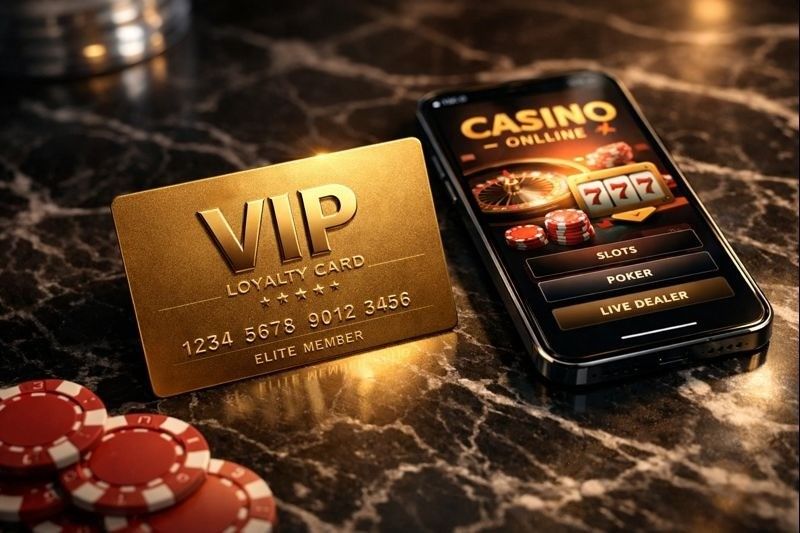
Casino loyalty programs are among the most sophisticated consumer retention systems in the modern entertainment economy. Far from simple punch-card rewards or straightforward rebate systems, these programs represent multi-tiered behavioral frameworks rooted in advanced data science, financial modeling, and cognitive psychology. Whether implemented in sprawling physical resorts on the Las Vegas Strip or integrated into digital online gaming platforms, casino loyalty architectures are engineered to optimize player lifetime value, extend gambling session duration, and secure sustainable theoretical win margins for operators.
The Financial Mechanics: Theoretical Loss vs. Actual Win
The fundamental mathematics underlying any casino rewards program starts with the decoupling of actual short-term player outcomes from calculated mathematical expectations. Casinos do not reward patrons based purely on whether a player walks away with a profit or a loss during a single visit. Instead, reward issuance is tethered directly to Theoretical Win, commonly abbreviated as Theo.
Theo is calculated using a standard mathematical equation:
Theoretical Win = Total Amount Wagered × Number of Decisions per Hour × Hours Played × Casino House Advantage
By calculating Theo in real time, the casino understands the precise mathematical expectation of revenue from every individual customer. Loyalty rewards, commonly known in the industry as complimentary services or comps, are allocated as a fixed percentage of this calculated value. Operators generally return between twenty and forty percent of a player’s theoretical loss back to the customer in the form of amenities, room upgrades, food credits, free play, or personalized hosting services. This structured mathematical framework guarantees that regardless of short-term variance or lucky player streaks, the casino retains its statistical margin over extended periods.
The Tiered Structural Architecture
Modern loyalty programs organize their consumer base into hierarchical tiers, often utilizing evocative naming conventions such as Silver, Gold, Platinum, Diamond, and Black Diamond or Seven Stars. This tiered design operates on specific structural rules:
-
Earning Velocity and Point Metrics: Programs distinguish between Tier Credits, which determine annual status placement, and Reward Credits, which function as spending currency redeemable for on-property goods, dining, and free play.
-
Status Expiration and Reset Timers: Tier status is usually earned over a twelve-month calendar cycle. If a player fails to generate sufficient wagering volume the following year, their status downgrades. This time constraint creates urgency, motivating members to plan additional trips before the qualification deadline elapses.
-
Aspirational Benefits: Higher tiers unlock perks that carry low marginal cost for the operator but high perceived value for the customer. These include priority check-in lines, waived resort fees, dedicated VIP host access, complimentary valet parking, and priority reservation windows at high-demand dining venues.
-
Tier Matching and Ecosystem Expansion: Major casino conglomerates partner with international airline carriers, cruise lines, hotel groups, and rental car agencies. By allowing tier reciprocity, operators capture travel spending well outside the physical boundaries of the casino floor.
Psychological Triggers and Gamification Principles
The sustained effectiveness of casino reward programs depends heavily on operant conditioning and behavioral economics. Designers deliberately embed psychological levers within every stage of the loyalty loop to encourage repeated visits and longer play sessions.
Variable Ratio Schedules of Reinforcement
Rooted in classical behavioral science, variable reinforcement rewards players at unpredictable intervals rather than on a predictable, fixed schedule. In a casino environment, this manifests as surprise direct mail bonuses, unannounced digital balance gifts, and random lucky coin draws integrated into electronic gaming devices. Because the brain experiences a stronger dopamine response to unpredictable rewards, players remain engaged longer in anticipation of potential random perks.
The Endowed Progress Effect and Loss Aversion
Loyalty system architects design progress indicators that visually frame players as being closer to a tier upgrade or milestone reward than they might feel organically. When a player receives a tier status match or an introductory promotional point grant, they are significantly more likely to continue wagering to reach the finish line.
Similarly, once a player achieves an elite tier, the fear of forfeiting those earned privileges activates loss aversion. The psychological friction associated with dropping back to standard status frequently drives additional wagering sessions late in the qualifying year.
Data Infrastructure and Real-Time Behavioral Tracking
The operational spine of modern casino loyalty programs consists of enterprise player tracking systems (PTS) and customer relationship management (CRM) engines.
On physical casino floors, tracking begins the moment a patron inserts their magnetic stripe card, taps their smartphone digital wallet, or opens a dedicated mobile application near a gaming terminal:
-
Slot Telemetry: Modern electronic gaming machines relay play speed, denomination preferences, bet sizing volatility, and exact button-press cadence back to central data warehouses.
-
Table Game Rating Systems: Pit managers utilize digital tablet consoles or radio-frequency identification (RFID) embedded chips to monitor player buy-ins, average wager sizes, hand speed, and total table time, instantly translating table activity into accurate Theo ratings.
-
Predictive Algorithmic Interventions: Machine learning models analyze real-time bankroll drawdowns. If an algorithm identifies that a valuable patron is enduring an unusually severe losing streak and exhibits behavioral signs of leaving, the system can immediately notify a floor host or dispatch an automated digital food-and-beverage comp directly to the player’s smartphone screen.
Personalization and Omnichannel Integration
The evolution of casino loyalty design focuses on unifying disparate consumer touchpoints into a cohesive player profile. Contemporary operators treat non-gaming spending with equal analytical rigor:
-
Non-Gaming Spend Integration: Players earn loyalty credits when purchasing high-end luxury retail items, attending arena concerts, booking spa treatments, or dining at Michelin-starred restaurants within the resort property.
-
Cross-Channel Online Convergence: Omnichannel platforms allow users to earn loyalty credits through regulated online sports betting, mobile iGaming applications, and social casino platforms, creating uninterrupted engagement even when patrons are hundreds of miles away from a physical casino property.
Frequently Asked Questions
Why do casinos prefer theoretical loss over actual loss when distributing player rewards?
Theoretical loss reflects the mathematically audited value of a patron’s play across thousands of wagers, stripping out temporary luck or short-term statistical variance. Relying on actual losses would penalize winning players by withholding rewards and overcompensate losing players beyond the long-term mathematical profitability of their bets.
What is the functional difference between hard comps and soft comps?
Hard comps represent actual cash expenses incurred by the casino when purchasing goods or services from third parties for a player, such as chartered flights or third-party concert tickets. Soft comps represent internal inventory with minimal marginal cost to the property, such as unoccupied hotel rooms, standard food services, and free slot play credits.
How do pit bosses estimate a table game player’s average bet without automated chip counters?
In venues without RFID chip tracking, table supervisors visually survey betting circles during dynamic play. They record the opening wager, note bet adjustments when the game flow shifts, and calculate an estimated average wager multiplied by the recorded table hands per hour to generate a baseline rating.
Can non-gambling guests reach the top VIP tiers of modern casino loyalty systems?
Yes. Major hospitality and entertainment gaming operators have redesigned their loyalty ecosystems so that dollars spent on fine dining, hotel suites, entertainment ticketing, and luxury retail earn qualifying tier points, allowing non-gambling patrons to achieve elevated status through general resort spending.
What criteria determines whether a player is assigned a dedicated personal VIP executive host?
Host assignment is governed by mathematical thresholds related to average daily theoretical loss (ADT) and consistent bankroll size. When a patron consistently meets or exceeds a target ADT threshold over multiple visits, automated CRM systems route their account to executive player development teams for tailored service.
How do casinos prevent loyalty program arbitrage and point manipulation?
Casinos employ automated game-monitoring algorithms that track betting patterns for mathematical exploitation. Activities such as low-risk hedge betting on roulette (betting red and black simultaneously) or coordinated point-farming strategies on video poker are flagged immediately, resulting in point forfeiture or program expulsion under standard terms and conditions.
What is reinvestment rate and how does it influence player promotional mailers?
Reinvestment rate refers to the percentage of a player’s theoretical win that the casino allocates toward marketing incentives. An operator might set a reinvestment rate of twenty-five percent, dividing that budget among direct mail free play offers, complimentary room nights, and dining credits tailored specifically to the customer’s historical spending habits.